

Did you purchase a new vacuum this holiday season? What about a new flat screen TV? Or maybe you invested in a new car? What did you do with the old ones that you had at home? Unfortunately, these appliances all contribute to the 2.12 billion tons of waste that is produced around the world each year (Long, 2022). Since major companies are not doing everything they could to reduce this issue, it is up to the countries themselves to find ways to combat the issue.
What kind of waste pollutes the earth?

Municipal Solid Waste

We contribute to this kind of waste everyday. Think about the products you discard on the daily… plastic forks or knives, product packaging, clothing, or furniture. The list can go on! All of this contributes to the 8.3 billion tons of plastic generated annually. In 2020, 2.24 billion tons of solid waste was created globally. This has been a result of the population growth and urbanization. Solid waste can be recycled, but often the percentage is very low.
Electronic Waste
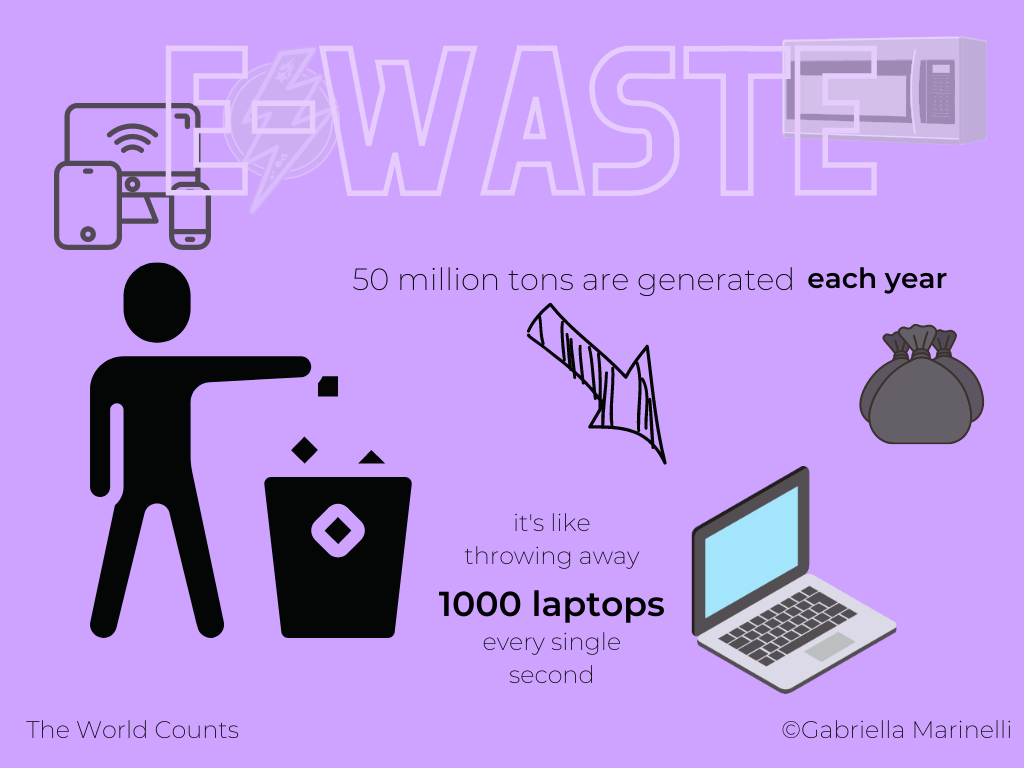
In this decade alone, electronic waste is extremely prevalent. Given the fact that electronic products don’t live forever, their time begins to give up. Not only do electronics go into the waste because their electronic life is over, but products also evolve and old versions become obsolete.
What the category is limited to is not exactly set. Of course smartphones, laptops, televisions, and VHRs fall under electronics, but even appliances like microwave ovens and air fryers can also be placed in this category.
For example, new iPhones come out every year, microwaves or vacuums break every now and then, and laptops need to be replaced every few years. This leads into hazardous waste which is explained in the next section because sometimes electronic products penetrates toxic chemicals in waste dumps.
Keep track of the annual electronic waste with this counter:
Hazardous Waste

Think about this. 13 tons of hazardous waste is generated every. single. second. With 86,400 seconds in a day, and 31,536,000 seconds in a year, just think about the amount if hazardous waste that is produced.
Hazardous waste is waste that is a great threat to individual health and the environment. These types of waste are toxic, infectious, radioactive, and flammable. They mainly come from chemical manufacturing, manufacturing of agricultural products, the manufacturing of iron and coal, and waste treatment and disposal.
The most common known hazardous wastes are batteries, cosmetics, and cleaning products.
Unfortunately, these waste products are known to mess with hormone systems, cause cancer and reproductive problems, birth defects, or damage the DNA of humans and animals.
Who is going to make this change?
If major corporations are not making the change, and consumers are not seeing the consequences of their actions, then it is now up to governments to interfere.
The European Union has seen the problems in waste on the environment and health and decided to take a step forward to see what they can do.
The impact is known: 5 tons of waste are produced each year by the average European and only 38% of European waste is recycled.
The EU has a waste policy that aims to improve waste management, stimulate innovation in recycling, and limit landfilling. It is great that all of this is being observed, but there must be data to show that footprints are being made in improving the issue. The EU has seemed to come up with their own solution, and will hopefully watch on around the world. Sustainable production is very important for our environments right now and consumers must make informed purchasing decisions
The Digital Product Passport

The Digital Product Passport is a solution in the European Union that reduces product waste by tracking the components and origin of raw materials of consumer goods. According to Too Certified, an article stated “The short lifespan of EE products contributes to e-waste being the fastest growing waste stream in the world with an annual growth rate of just over 4 percent” (Nobell, 2022).
By taking inventory of the products used over the years, consumers will collect more data about the impact of their purchases.
This is part of the Ecodesign for Sustainable Products Regulation and Circular Economy Action Plan.
Starting in 2026 – each industrial and electric vehicle battery must come with a digital product passport. This helps with safety requirements and recycled elements in batteries. This data will also help test battery durability.
These enterprise systems are not easy to implement. The product identifiers include QR codes, RFID (radio frequency identification) tags, or barcodes. When the tag is scanned, the producers, consumers, waste managers, and law enforcement agencies can gain access to information for other stakeholders. This helps build relationships with consumers and both sides of the transaction becomes more familiar with the effects of the purchase
All the groundwork for these passports are projected to be completed by 2024.
Learn some more from the SBS Business School:
The digital passport will make change to environmental impacts of products, or their volume of trade in the EU and determines which products have ecodesign requirements. The Product Environmental Footprint determines the standard calculations of the impact of products on the environment.
The Ultimate Impact
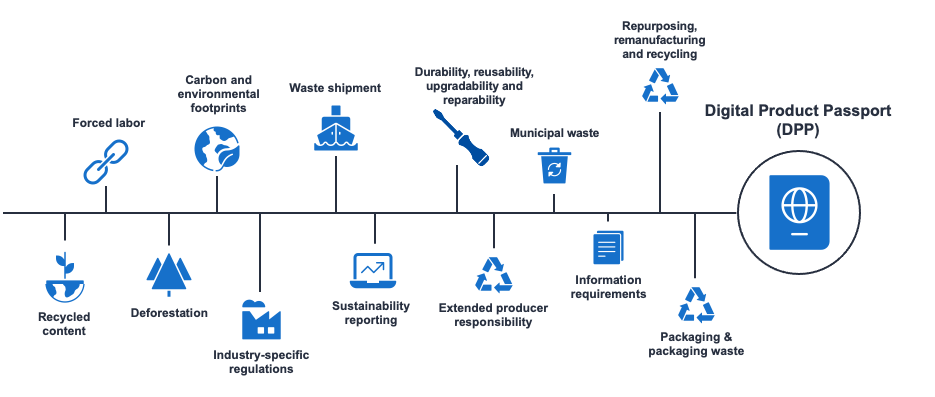
The EU’s economy needs to be more resilient from the past few years. The Digital Product Passport supports the climate and environmental ambitions of the European Union and it is ideal if it can make an impact on other unions throughout the world.
References
Andreas.langer@tcodevelopment.com. (2022, September 8). What Digital Product passports are and why you need to care. TCO Certified. Retrieved December 4, 2022, from https://tcocertified.com/blog/what-digital-product-passports-are-and-why-you-need-to-care/
Digital Product Passports (DPP): What, how, and why? Circularise. (n.d.). Retrieved December 4, 2022, from https://www.circularise.com/blog/digital-product-passports-dpp-what-how-and-why
Electronic Waste Facts. The world counts. (n.d.). Retrieved December 6, 2022, from https://www.theworldcounts.com/challenges/waste/electronic-waste-facts
Elizabeth LongJul 13, 2022. (n.d.). How much do we waste? A data-driven guide to waste and landfills. Environmental Protection. Retrieved December 6, 2022, from https://eponline.com/articles/2022/07/13/how-much-do-we-waste.aspx
Franz, R. L. (2022, August 1). What a digital product passport could mean for recyclers. Recycling Today. Retrieved December 4, 2022, from https://www.recyclingtoday.com/article/eu-digital-product-passport-end-of-life/
Franzen, H. (2017, July 20). 8.3 billion tons of plastic on Earth – DW – 07/20/2017. dw.com. Retrieved December 6, 2022, from https://www.dw.com/en/there-are-83-billion-tons-of-plastic-in-the-world/a-39765670
Gumbau, A. (2022, November 21). Digital product passports become the norm in EU’s Green Economy Plan. http://www.euractiv.com. Retrieved December 4, 2022, from https://www.euractiv.com/section/circular-economy/news/digital-product-passports-become-the-norm-in-eus-green-economy-plan/
Hazardous Waste Statisctics. The world counts. (n.d.). Retrieved December 6, 2022, from https://www.theworldcounts.com/challenges/planet-earth/waste/hazardous-waste-statistics
Waste and recycling. Environment. (n.d.). Retrieved December 6, 2022, from https://environment.ec.europa.eu/topics/waste-and-recycling_en
World Bank Group. (2022, May 31). Solid waste management. World Bank. Retrieved December 6, 2022, from https://www.worldbank.org/en/topic/urbandevelopment/brief/solid-waste-management
 Gabriella Marinelli